Best Practices, Power Quality Consulting, Power Quality Matters, Power Quality Monitoring
The Low-Inertia Trap
17
Jun
Jun
Notice: JavaScript is required for this content.

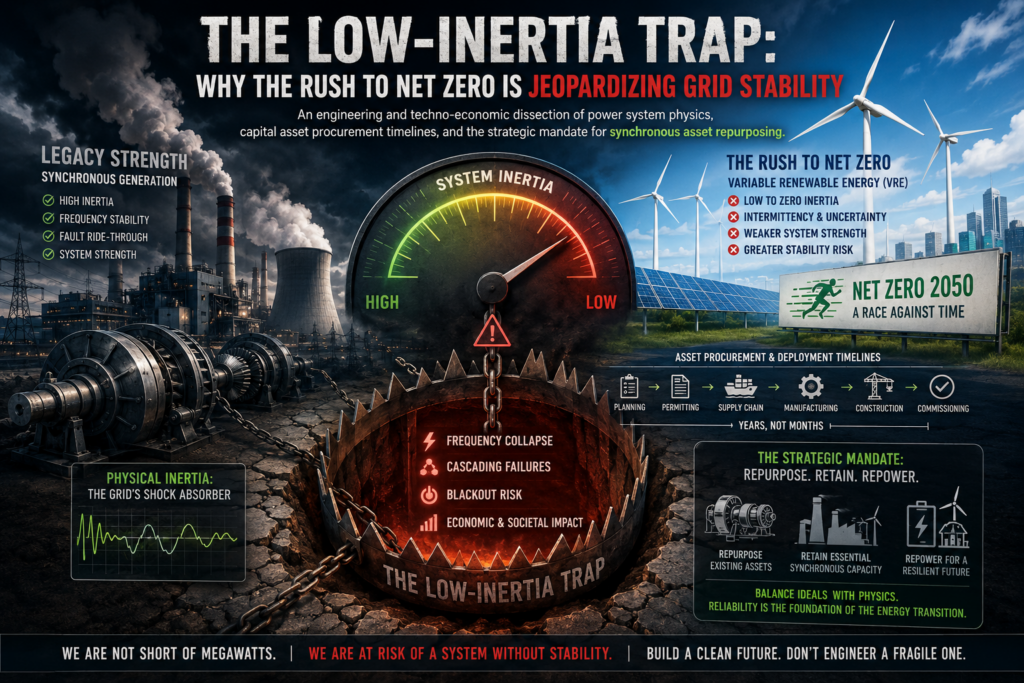
The physical kinetic energy stored within the massive, rapidly spinning steel rotors of traditional synchronous generators (such as coal, gas, hydro, and nuclear power plants). Because these rotors are magnetically locked to the grid’s operating frequency (e.g., 50Hz or 60Hz), any sudden imbalance between electricity generation and demand causes them to physically speed up or slow down. This instantly releases or absorbs kinetic energy, acting as a natural, zero-delay shock absorber that resists changes in system frequency.
Notice: JavaScript is required for this content.
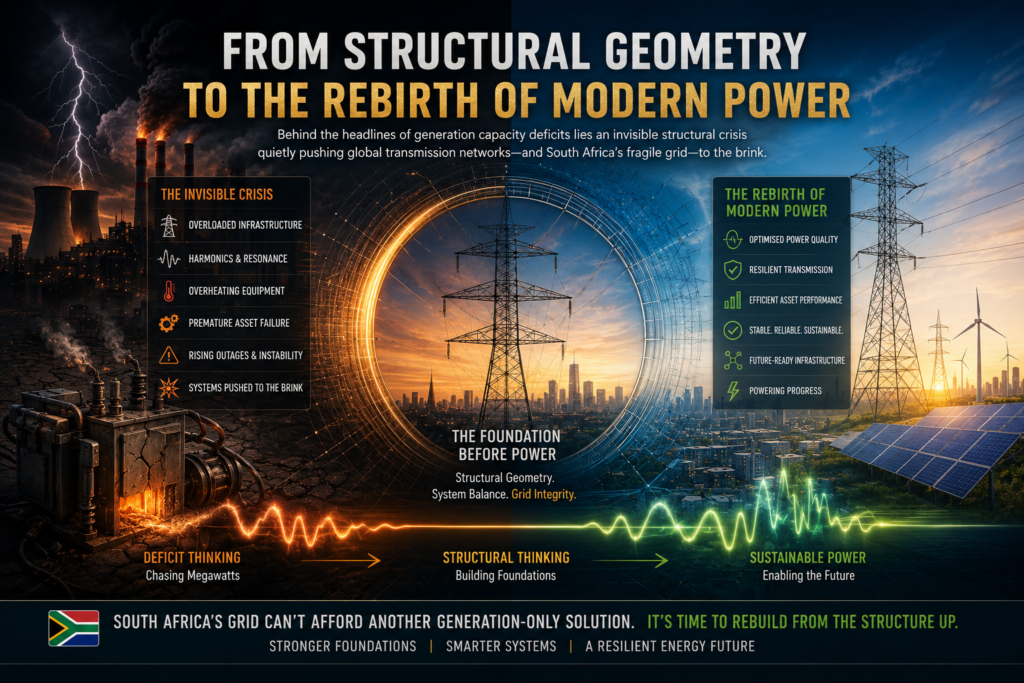
As South Africa’s electrical grid shifts away from centralized, coal-fired thermal generation toward non-synchronous renewable energy sources, it faces an immediate, existential structural vulnerability: the systemic depletion of power system inertia.
The decommissioning of massive, synchronized spinning generator rotors removes the physical, electromechanical buffer that has historically stabilized the transmission network. While utility-scale Battery Energy Storage Systems (BESS) are critical components of a modern grid mitigation strategy, relying on them as a drop-in replacement for physical inertia introduces a catastrophic protection gap. This briefing addresses the structural mechanics of a Rate of Change of Frequency (RoCoF) Surge and details why digital response times cannot outrun the immediate physics of an inertia-starved power system.