Best Practices, Consulting Services
How to Transform Asset Management

Jul
My Journey in South Africa’s Power Sector
My career in the electrical infrastructure landscape began during an intense window of practical exposure at Eskom between October 1974 and May 1975. Tasked with the real-world operational challenges of the Distribution and Transmission Power Networks, I was directly responsible for network reliability, executing regular equipment inspections, field troubleshooting, and overseeing critical network modifications.
This high-stakes environment provided me with a granular, first-hand understanding of the grid complexities that commercial and industrial enterprises continue to face today. It reinforced a foundational truth: continuous system monitoring and rigorous asset governance are not administrative overhead—they are the line between systemic failure and absolute operational resilience.
The Shift from Reactive Maintenance to Lifespan Optimization
The Limits of Paper-Based Systems
Promoted to regional maintenance management in March 1976, I took control of a framework entirely reliant on rigid, paper-bound tracking. This approach had immense systematic limitations. Operating strictly on predetermined time intervals meant components were either serviced too early—wasting capital—or too late, resulting in unexpected, catastrophic blackouts. The administrative friction of manual filing and error-prone data retrieval made fast, strategic intervention nearly impossible.
The Digital Catalyst: CMMS to EAM
Recognizing these cracks in the foundation, I championed the adoption of Computerized Maintenance Management Systems (CMMS). This effectively digitized our workflows, moving the operational culture from firefights to structured scheduling. But digitization was only step one. Over the following decades, this framework matured into comprehensive Enterprise Asset Management (EAM)—a philosophy looking past isolated fixes to govern an asset’s complete engineering and financial life cycle.
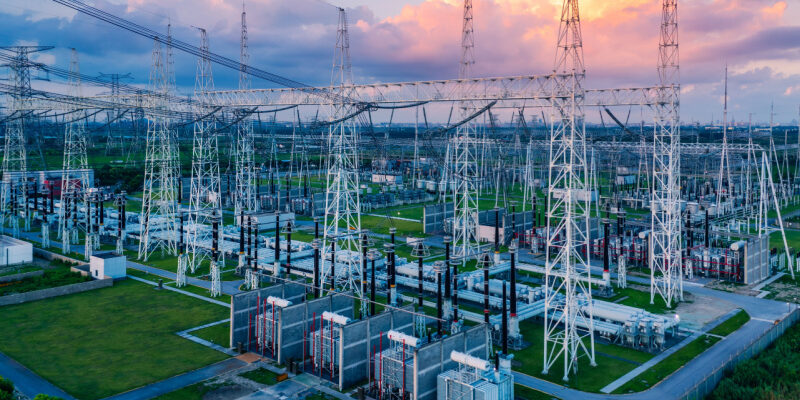
Fig 1: Interconnected automated substations require real-time telemetry and a clear data foundation to balance load variances and protect critical systems.
The Evolution of Plant Asset Strategy
Where does your commercial or industrial operation currently sit on the engineering maturity curve?
Reactive & Time-Interval
Relying on manual logs, static spreadsheets, or arbitrary intervals. Maintenance acts as an emergency expense, exposing systems to high human error and unforeseen breakdown costs.
The CMMS Framework
Digitized workflows where tracking shifts to a proactive footing. Repairs are logged systematically, reducing human administrative slip-ups, though assets remain managed in functional isolation.
Integrated EAM Strategy
A full cultural and technological pivot. Merging Protection, Telecommunications, Metering, and Control systems into a single operational web to secure grid stability and lifecycle ROI.

Fig 2: Incorporating distributed commercial solar arrays requires accurate asset data to manage network balance and prevent power unbalance penalties.
Unifying Protection, Control, and Renewable Integration
The peak of my career landscape involved moving beyond simple physical asset upkeep to serve as Manager of Protection, Telecommunications, Metering, and Control Systems (PTM&C). This role proved that high-level technical systems cannot thrive inside silos.
When an industrial site deploys complex machinery alongside localized generation, like optimized rooftop solar arrays, the risk of total harmonic distortion and phase unbalance jumps dramatically. Securing long-term asset value requires aligning your physical framework with real-time controls:
- Strategic Alignment: Treat power quality and asset health as one interdependent ledger to prevent early machine wear.
- Mitigate Hidden Risks: Convert baseline asset telemetry into clear visibility, avoiding unbalance fees.
- Continuous Adaptation: Build an agile operational loop capable of adapting as regional grid infrastructure becomes more volatile.
