Best Practices, Power Quality Consulting, Power Quality Matters, Power Quality Monitoring
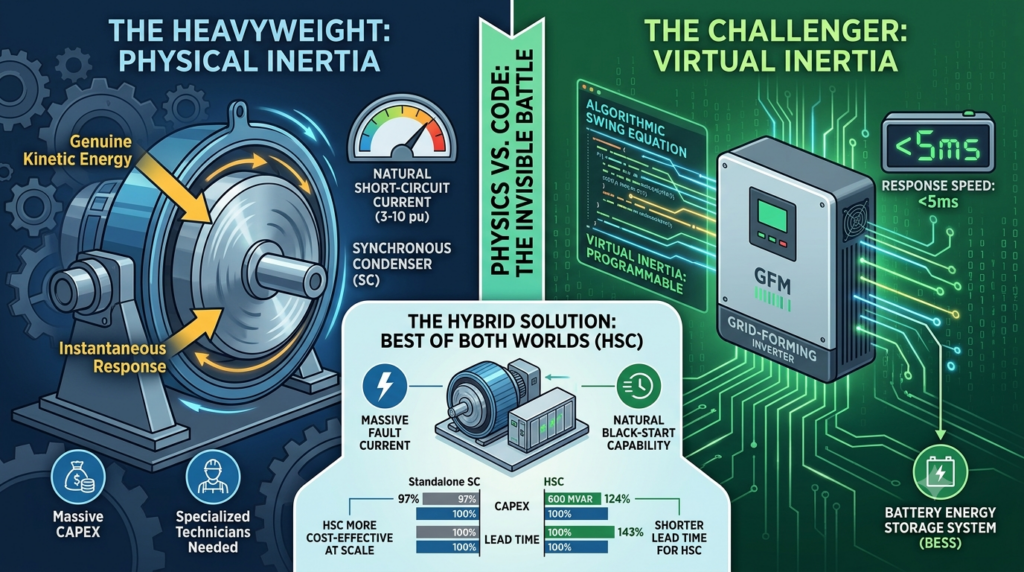
Physics vs. Code
25
Jun
Jun
Notice: JavaScript is required for this content.

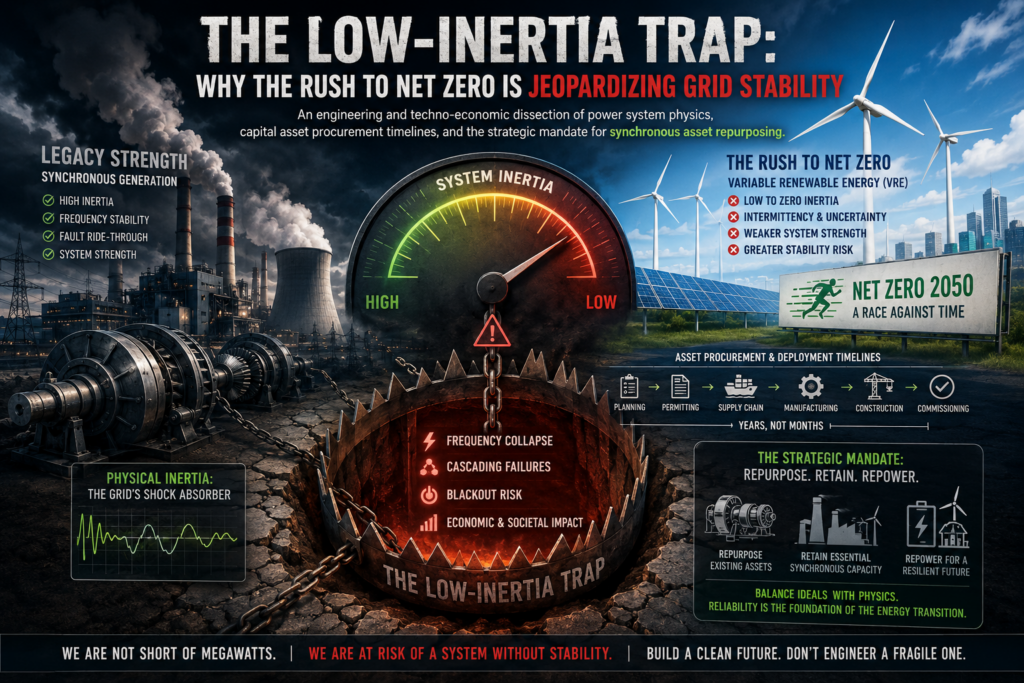
The ability of a power system to maintain synchronism and return to a stable operating state after being subjected to continuous, small, or sudden disturbances. Unlike transient stability (which focuses on the first few swings immediately following a massive fault), dynamic stability analyzes the system’s behavior over a longer time horizon (typically several seconds to minutes), specifically focusing on whether internal oscillations attenuate or grow uncontrollably.
Notice: JavaScript is required for this content.
Notice: JavaScript is required for this content.
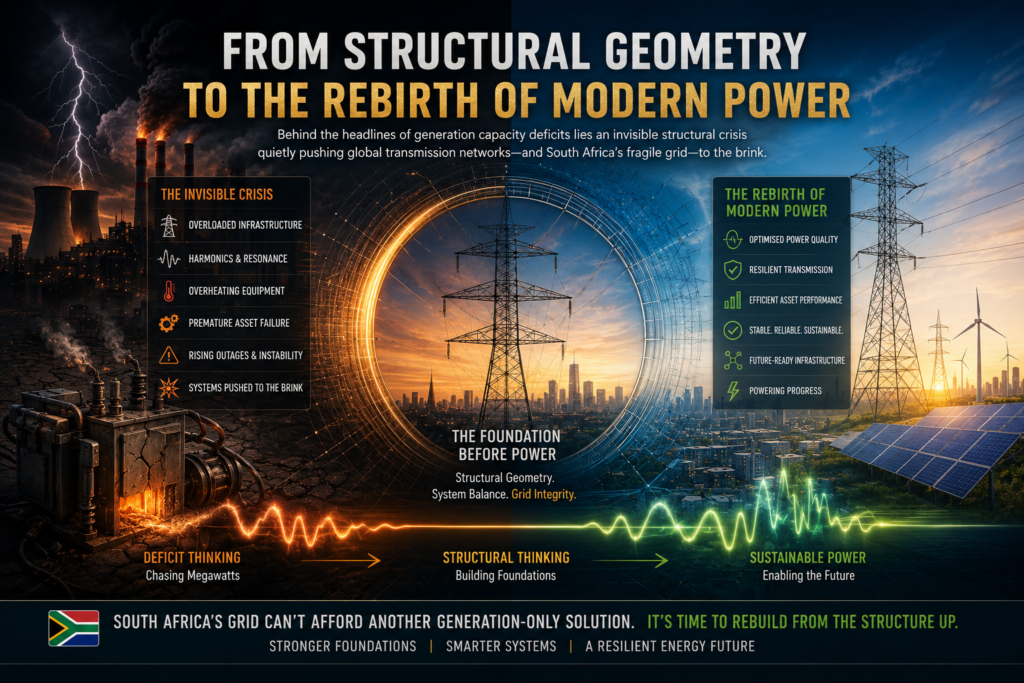
As South Africa’s electrical grid shifts away from centralized, coal-fired thermal generation toward non-synchronous renewable energy sources, it faces an immediate, existential structural vulnerability: the systemic depletion of power system inertia.
The decommissioning of massive, synchronized spinning generator rotors removes the physical, electromechanical buffer that has historically stabilized the transmission network. While utility-scale Battery Energy Storage Systems (BESS) are critical components of a modern grid mitigation strategy, relying on them as a drop-in replacement for physical inertia introduces a catastrophic protection gap. This briefing addresses the structural mechanics of a Rate of Change of Frequency (RoCoF) Surge and details why digital response times cannot outrun the immediate physics of an inertia-starved power system.