Best Practices, Consulting Services, Power Quality Consulting, Power Quality Monitoring
Rebirth of Modern Power
Jun
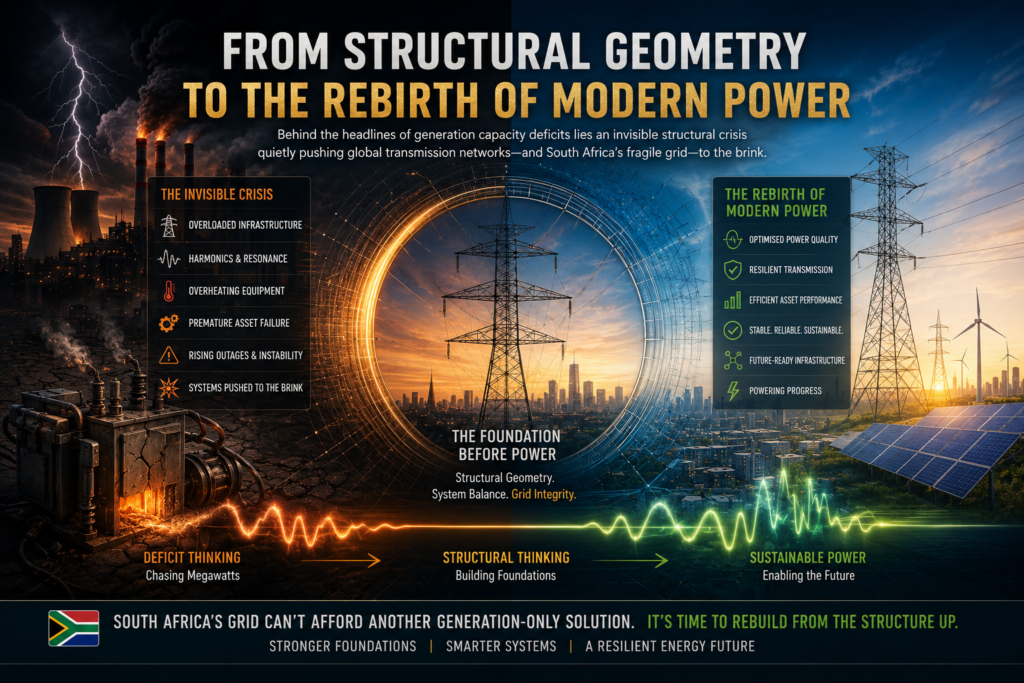
The Silent Grid Contamination: From Structural Geometry to the Rebirth of Modern Power
Behind the headlines of generation capacity deficits lies an invisible structural crisis quietly pushing global transmission networks—and South Africa’s fragile grid—to the brink.
For decades, the global conversation surrounding modern energy landscapes has focused on a single, highly visible crisis: generation capacity. Headlines are constantly dominated by discussions around megawatt deficits, load shedding, and the rapid race to hook up new renewable energy sources.
But behind the noise of balancing supply and demand lies a far more insidious, invisible crisis that is quietly destroying industrial equipment, pushing electrical infrastructure to the brink, and threatening absolute system failure.
According to its official mandate, the Energy Council of South Africa is a CEO-led initiative that brings together key public and private sector companies, business/industry associations, and finance institutions that have a significant presence and actively participate in the energy sector. It serves as a unified leadership platform bridging the gap between government entities, financial institutions, and private industry to reshape the nation’s power landscape.
By fostering a shared strategic vision, the organization aims to harmonize national policy with the urgent need for sustainable investment and local job creation. Their primary mission involves navigating the national energy transition, balancing the demands of energy security with a legal commitment to reach Net Zero emissions by 2050.
Critical Advisory Warning: However, a technical audit of this transition architecture reveals a glaring conflict of realities. The majority of the board members directing this council have heavy, vested commercial interests in renewable energy deployment and the Net Zero 2050 timeline. From an infrastructure stability perspective, there is an alarming absence of systemic focus on what this rapid decarbonization trajectory means for real-time grid physics, dynamic stability, and power quality.
It is the crisis of deteriorating Power Quality (PQ) and collapsing System Inertia. Modern grids are experiencing structural contamination during transit, and the root cause isn’t just how much power we make—but the physical geometry of the transmission lines and the catastrophic loss of heavy, spinning synchronous mass.
Technical Alert: The Low-Inertia RoCoF Vulnerability
As South Africa aggressively decommissions its aging coal-fired fleet—turning off the massive, multi-ton steel rotors that provide natural electromechanical inertia—the grid is being exposed to existential dynamics. Renewable assets (solar PV and wind) utilize power electronic inverters that natively contribute zero physical inertia to the system.
When a major generation unit trips or a sudden load mismatch occurs, the system frequency no longer drifts gently. Instead, it plunges at an unmitigated velocity. This phenomenon, known as a Rate of Change of Frequency (RoCoF) Surge, causes the system frequency to plummet drastically toward critical thresholds before traditional control loops can even register the event.
The Myth of Instantaneous BESS Protection
Proponents of a pure-renewables transition frequently point to Battery Energy Storage Systems (BESS) running Fast Frequency Response (FFR) as the ultimate grid savior. This is a dangerous, mathematically flawed assumption for high-level stakeholders.
- The Physics of Inertia: Real physical inertia from a spinning generator acts in true zero milliseconds because it relies on the laws of conservation of energy—extracting kinetic energy natively from the rotating mass.
- The BESS Time Delay: A BESS asset requires a discrete measurement cycle, digital signal processing calculation, power electronics switching sequence, and current ramping phase. Even the most advanced FFR systems take anywhere from 20 to 100+ milliseconds to inject active power.
- The Critical Velocity: During an unmitigated RoCoF Surge on a low-inertia grid, the frequency can plunge past the first-stage Under-Frequency Load Shedding (UFLS) or generator trip limits in less than 100 milliseconds. By the time the BESS responds, the cascading system trip has already been triggered.
The Misconception: Protection Schemes Arrive Before the Fire
There is a common, comforting misconception circulating among high-level stakeholders that advanced protection schemes and digital control loops can somehow peer into the future and activate before a catastrophic event fully manifests. This is simply a violation of power system physics.
“Protection systems are reactive by design, not clairvoyant. Their mandate is not to prevent a fault, but to detect an already executing anomaly and rapidly isolate the compromised equipment, transmission line, or generation sector.”
By disconnecting the compromised area, these schemes allow the remaining healthy system to continue operating safely. However, this distinction is hyper-critical when evaluating low-inertia grid stability during a severe generation-to-load mismatch.
The Race Against Unmitigated RoCoF
Because these systems react to an event, it means by the time your digital protection relays trip and traditional Grid-Following Battery Energy Storage Systems (BESS) process the phase deviation to begin active power injection, the grid frequency has already entered a critical downward trajectory. In a low-inertia landscape stripped of the physical spinning kinetic mass of decommissioned coal-fired plant generators, the Rate of Change of Frequency (RoCoF) causes the system frequency to plunge at an unmitigated velocity.
The Reality: We are not managing a near-miss; we are managing the immediate aftermath of a structural disruption. The grid is already under immense, systemic stress the exact millisecond our automated defense mechanisms kick in.
Part 1: The Anatomy of Grid Contamination
In a perfectly balanced three-phase power system, alternating current waveforms are identical in magnitude and spaced precisely 120 degrees apart, rotating in a harmonious “positive” sequence (A → B → C). However, when this symmetry is broken, a destructive phenomenon known as Negative Phase Sequencing (NPS) is unleashed.
NPS essentially introduces an opposing electrical vector—a phantom force spinning in the exact reverse direction of the normal grid frequency (A → C → B). This structural unbalance triggers a devastating, multi-regional power quality cascade:
Vector Sequence Disruption (Rotational Domain)
|
Positive Sequence (A → B → C) True Forward Rotation |
Negative Sequence (A → C → B) Destructive Counter-Rotation |
1. The Harmonic PipelineWhen non-linear inverter-based loads pull current unevenly, they inject harmonics into the network. The 5th, 8th, 11th, and 14th integer harmonics are inherently negative sequence profiles that feed and amplify existing grid NPS vectors. |
2. Thermal AggressionBecause NPS vectors rotate backward, they generate massive electromagnetic counter-torque inside rotating machinery. For transformers and lingering synchronous units, this causes extreme localized heating and breakdown of insulation. |
3. Protective Tipping PointUnbalances erode system safety parameters. Modern protection relays frequently mistake sharp asymmetric voltage swings for severe faults, causing remaining generation plants to instantly trip offline, amplifying RoCoF cascades. |
Part 2: The Silent Factories of Asymmetry—Untransposed Transmission Lines
While engineers frequently blame industrial consumers for injecting power quality contamination, a massive portion of this crisis is entirely structural, manufactured by the geometry of the bulk grid itself. Enter the problem of Untransposed Transmission Lines.
When high-voltage transmission lines traverse hundreds of kilometers, the physical conductors are strung on massive towers in specific arrangements (vertical, horizontal, or triangular). Because of this physical positioning, the distance between each phase conductor and the earth—as well as the spacing between the conductors themselves—is unequal.
Geometric Spatial Inequality & Asymmetrical Impedance
Unbalanced line geometries create spatial inequalities. Without periodic physical rotation (transposition), the physical arrangement continuously acts as a giant factory of Negative Phase Sequencing.
At Extra-High Voltage (EHV) and Ultra-High Voltage (UHV) levels, where lines span massive distances to connect remote generation to metropolitan hubs, these unbalanced physical geometries act as giant, silent factories of Negative Phase Sequencing. If these lines are left untransposed—meaning the physical positions of the conductors are not periodically rotated or swapped along the route to equalize their impedance—the line itself continuously poisons the electricity flowing through it.
As synchronous thermal generation is systematically phased down, the grid loses its natural electromechanical buffer to absorb this geometric asymmetry. Combined with the vulnerability of ultra-low grid inertia, the network becomes dangerously fragile, unbalancing phase-shift profiles and amplifying the destructive harmonic currents trying to find their way to earth.
Part 3: The Path Forward—Rebirthing Coal and Gas Power Stations
To restore structural symmetry and secure the grids of tomorrow, operators can no longer rely on broad average metrics; they must look at physical reality. Fixing the transmission network requires heavy engineering interventions: mandating rigid line transposition cycles, deploying localized high-precision telemetry, and injecting critical System Strength and Inertia back into the core grid.
But as massive coal and gas-fired power stations face decommissioning due to global climate mandates, we are presented with an extraordinary, elegant engineering solution: Rebirthing these closing plants into Synchronous Condensers (SCs).
What is a Synchronous Condenser?
A synchronous condenser is essentially a massive conventional generator spinning in absolute synchronization with the grid’s frequency—but without being attached to a carbon-emitting boiler or fuel source. Instead of generating real active power (megawatts), it draws a tiny fraction of power from the grid to stay spinning, acting as a colossal electromechanical anchor.
Step-by-Step Engineering Execution: The Asset Metamorphosis
Transitioning a thermal plant generator set from traditional, coal or gas-fired active generation into an electromechanical grid stabilizer involves a highly structured engineering protocol:
Step
1
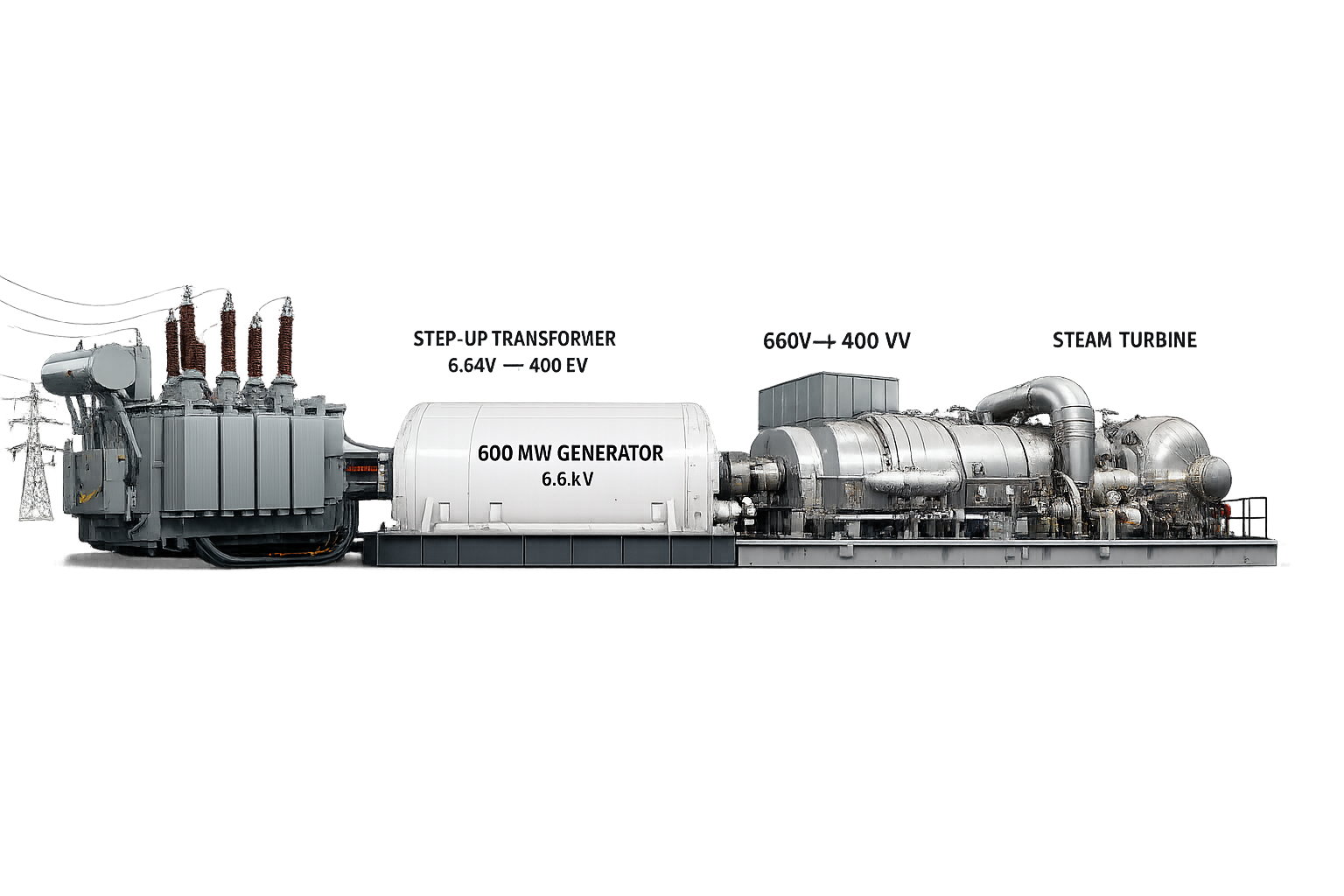
Decommission the Power PlantThe thermal generation unit is officially taken offline from active fuel injection. Fireboxes are extinguished, and boiler assemblies are brought down to cold conditions while leaving high-voltage grid connections, core instrumentation, step-up transformers, and busbars intact. |
|
Step
2
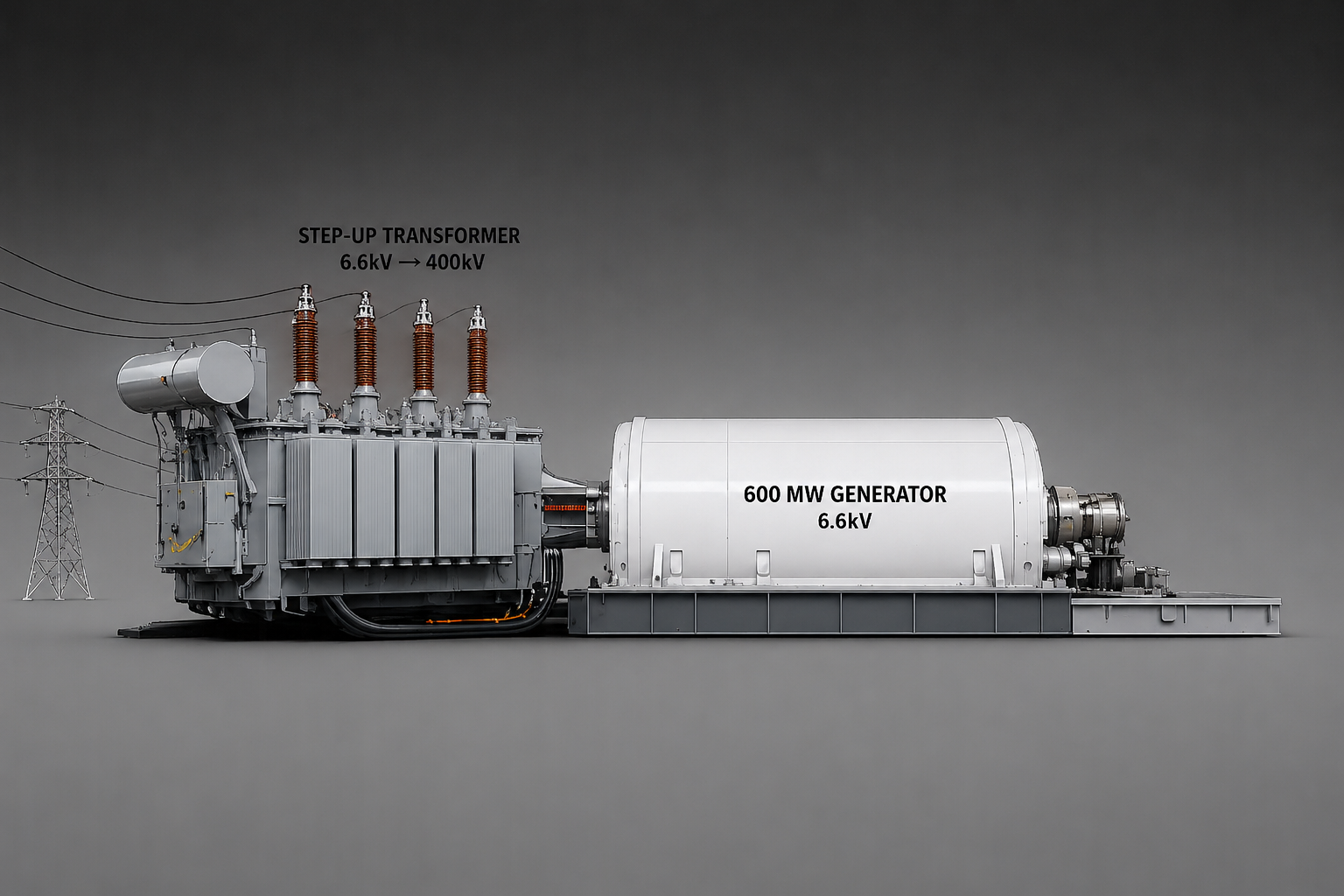
Remove Steam / Gas TurbineThe mechanical coupling linking the massive steam or gas turbine to the electrical generator rotor is split. The prime mover components are physically extracted or disconnected, completely removing fuel reliance and eliminating maintenance overhead associated with thermodynamic cycles. |
|
Step
3
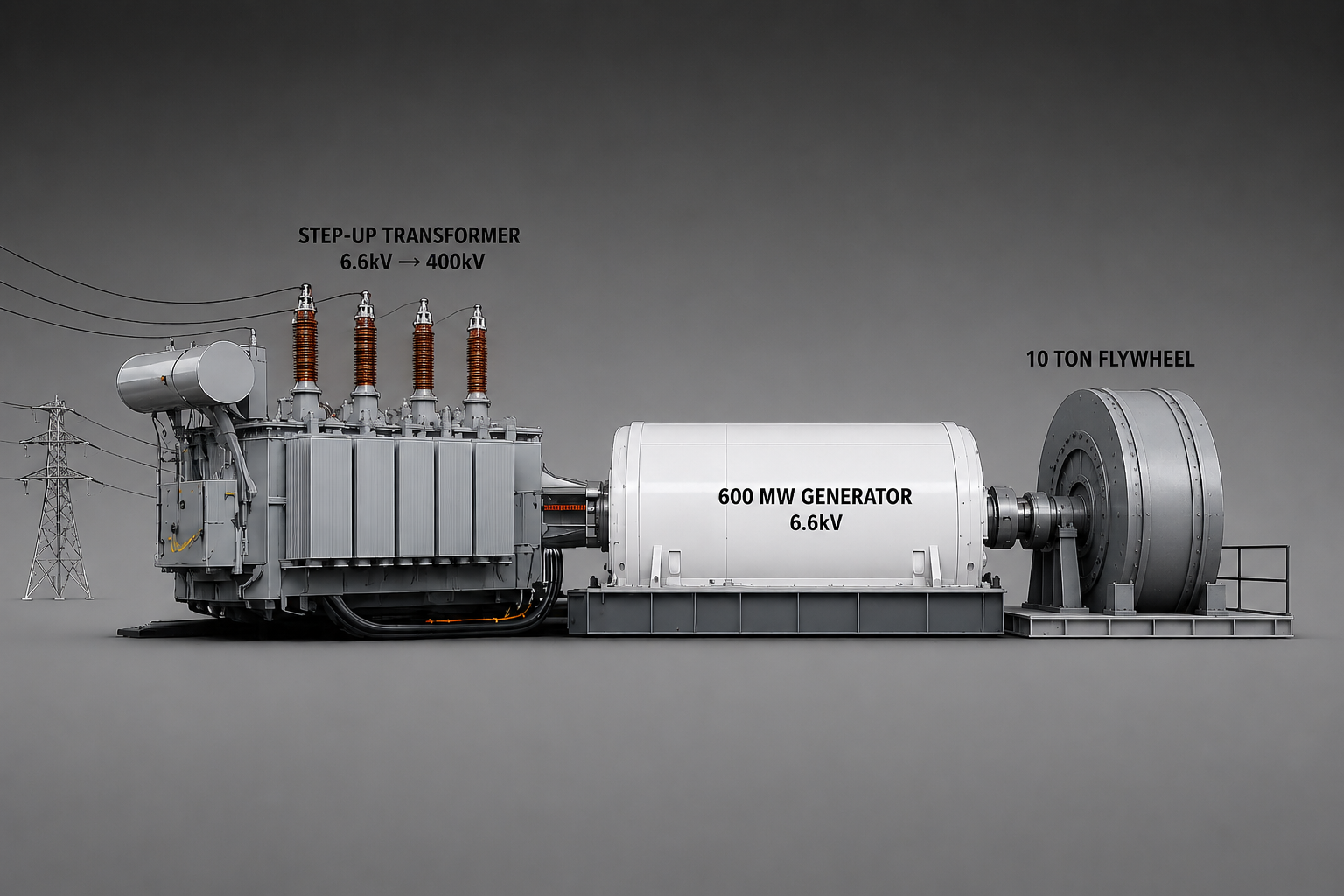
Add FlywheelTo substitute for the missing rotational inertia of the decoupled turbine stages, a high-density mass—such as a specialized 10-ton flywheel asset—is permanently balanced and mounted directly to the rotating shaft. This structural addition guarantees the massive electromechanical anchor has the physical inertia required to block grid-frequency drops instantly and counteract RoCoF surges. |
|
Step
4
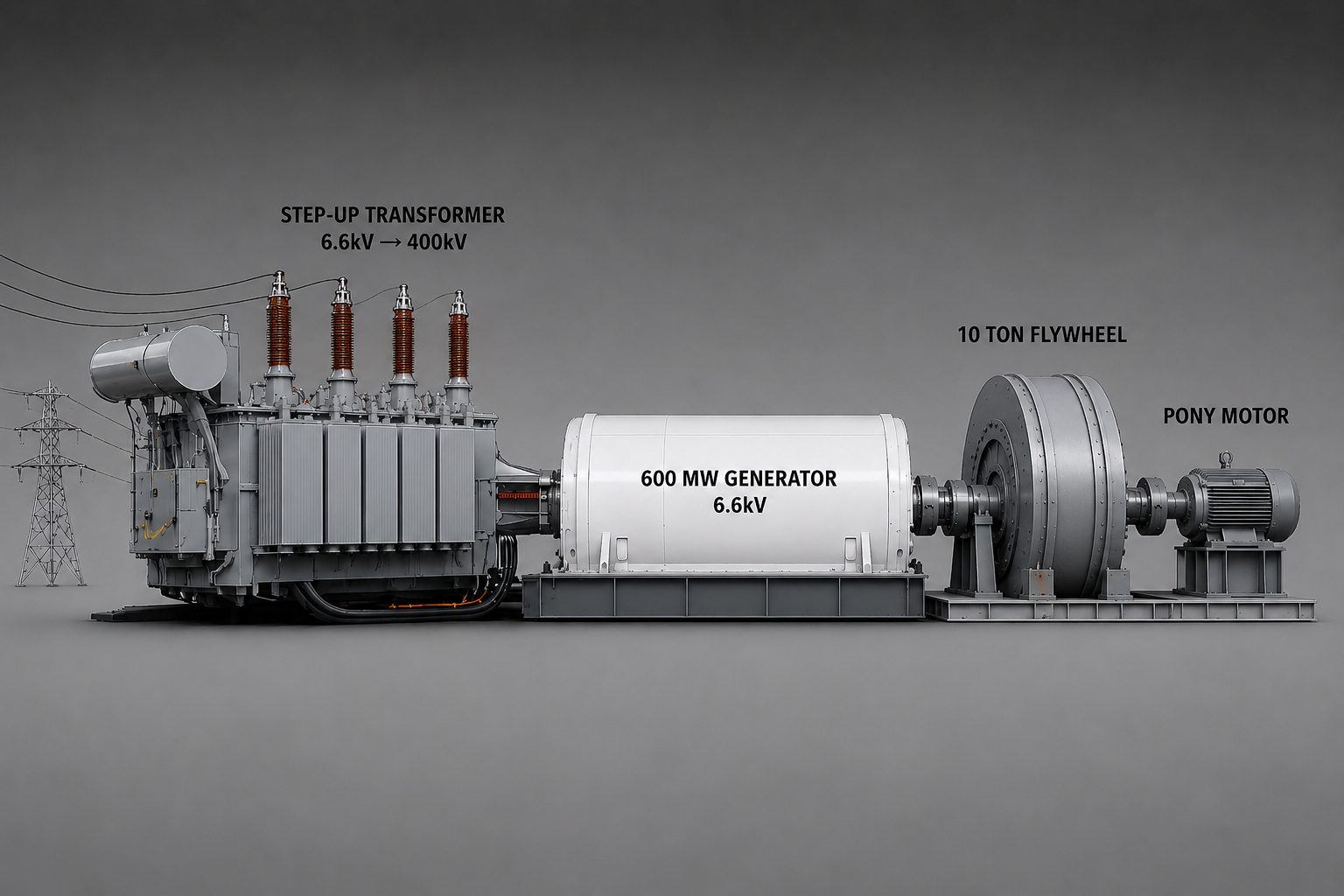
Add Pony MotorBecause synchronous condensers do not produce their own mechanical drive power, a dedicated fractional startup drive—a pony motor—is attached. This configuration starts the entire unit from a standstill, bringing the heavy unpowered shaft assembly smoothly up to synchronous electrical speed. Once matched, the generator safely synchronizes with the utility grid, and the pony motor cleanly uncouples via an integrated mechanical clutch assembly. |
|
Why Re-Purposing is the Ultimate Grid Savior:
- ✓ Immediate System Strength & True 0ms Response: Reborn synchronous condensers possess massive, physical rotating mass. Unlike battery solutions which suffer from severe 20ms to 100ms calculation and processing delays, this physical inertia limits the immediate Rate of Change of Frequency (RoCoF) during disruptions in absolute real-time, buying automated control systems time to respond without tripping transmission layers.
- ✓ Damping Unbalance and Swings: Because these machines behave as solid voltage source anchors, they dramatically increase localized short-circuit capacity. Their natural physics allow them to natively counteract voltage unbalance, absorb transient shocks, and suppress volatile voltage swings caused by untransposed transmission lines.
- ✓ Bypassing Supply Chain Bottlenecks: Grids across the globe are scrambling for purpose-built synchronous condensers, resulting in skyrocketing costs and massive manufacturing order backlogs. Rebirthing an old asset utilizes existing infrastructure—the massive generators, heavy-duty step-up transformers, switchgear, and high-capacity grid connections are already perfectly in place.
“Converting a single large, existing thermal generator (e.g., a 750 MVA unit) can completely obviate the need to construct five or more smaller, purpose-built synchronous condensers from scratch. It slashes implementation timelines down to a fraction of the time, saving hundreds of millions in capital expenditure.”
The Mandate for Physical System Strength
The current regulatory focus on market unbundling and capacity procurement is a dangerous abstraction if divorced from the sub-millisecond physics of grid operations. To prevent a catastrophic cascading failure, the transition must shift from a “generation-first” philosophy to a “stability-first” engineering mandate.
- Bridging the Response Gap: Battery Energy Storage Systems (BESS) are critical assets, but they operate within the limitations of power electronic control loops. In a severe RoCoF (Rate of Change of Frequency) event—where a generation-to-load mismatch causes system frequency to plunge at an unmitigated velocity—the delay between a frequency deviation trigger and the full deployment of synthetic inertia from inverter-based resources can exceed the window required to arrest a collapse. Consequently, BESS deployment must be legally mandated to include “Fast Frequency Response” (FFR) specifications that operate at timescales significantly faster than current grid code requirements.
- Synchronous Inertia as a Non-Negotiable Asset: As the synchronous rotating mass of retiring coal plants is removed from the grid, it creates a void in intrinsic inertia. This void cannot be filled by software; it requires physical, rotating mass. Repurposing retired thermal assets into synchronous condensers is not merely an optional strategy; it is a vital engineering necessity to provide the short-circuit strength and reactive power support required to maintain voltage stability.
- The Enforcement of Grid Integrity: Regulators (NERSA) and the Grid Operators (NTCSA) must move beyond advisory oversight to the enforcement of rigorous grid codes that demand physical compliance from renewable energy providers. We must transition to a framework that mandates “grid-forming” capabilities as a prerequisite for grid connection, ensuring that all new generation capacity contributes to, rather than erodes, the harmonic and phase integrity of the system.
