01 / ALIGN
Translate purpose into priorities
Define stakeholder needs, service outcomes, asset management objectives and decision criteria. Establish a traceable connection between organisational strategy and asset-level work.

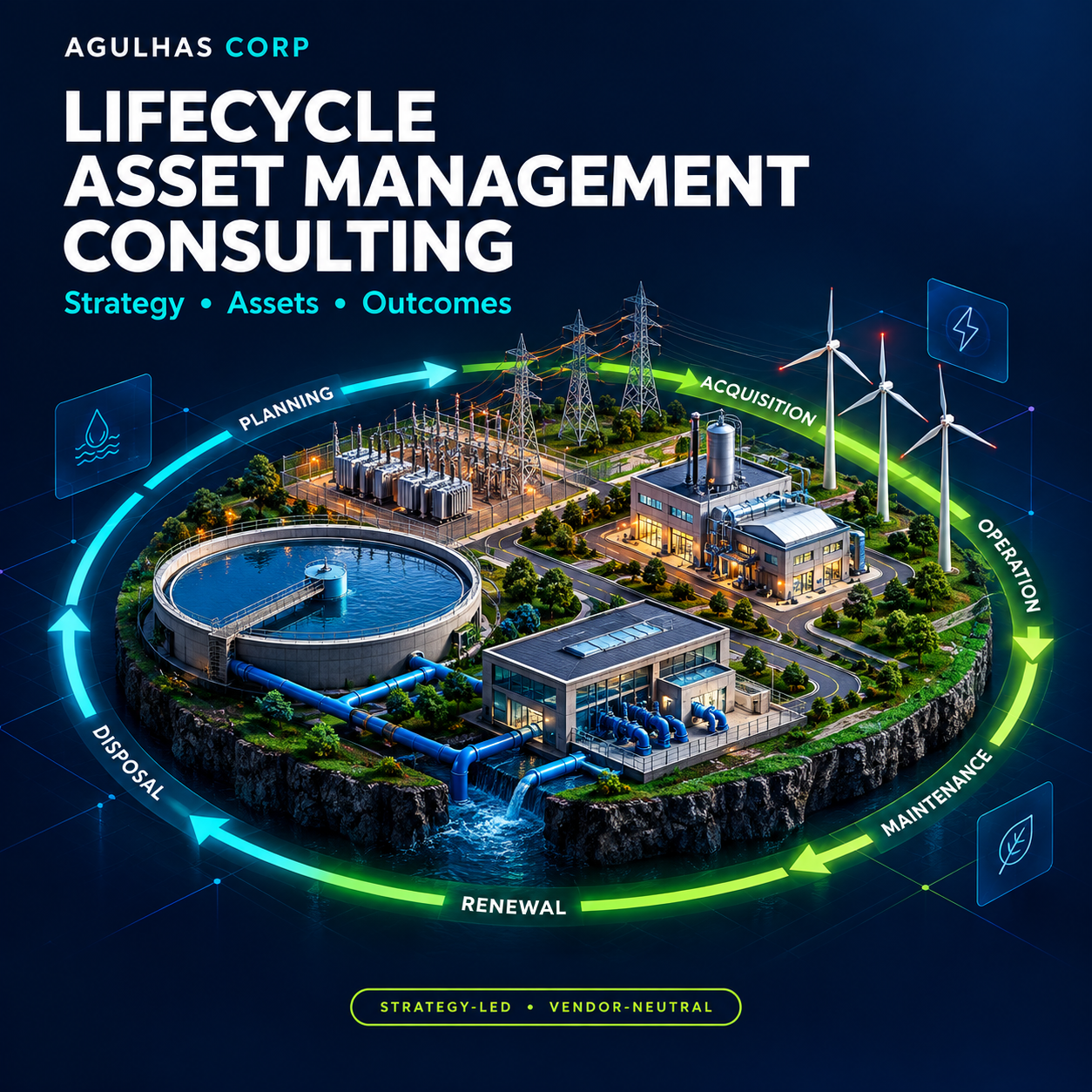
Turn organisational vision into practical lifecycle asset decisions. Strategy-led consulting covering governance, asset information, condition and risk, lifecycle planning, investment priorities, people and vendor-neutral EAM enablement.
For utilities, municipalities and asset-intensive organisations. Scope, fees and timeframes agreed by proposal.
Built around your organisation
Your vision, mission, mandate, service obligations and strategic objectives set the direction. We propose the asset management governance, lifecycle plans, information and enabling technology needed to support that direction.
01 / ALIGN
Define stakeholder needs, service outcomes, asset management objectives and decision criteria. Establish a traceable connection between organisational strategy and asset-level work.
02 / UNDERSTAND
Assess current practices, asset registers, data quality, condition, criticality and risk. Record evidence gaps and assumptions before developing recommendations.
03 / ACT
Develop agreed lifecycle actions, investment scenarios, responsibilities, funding requirements and measures. Progress through client-approved decision gates.
Shape the scope
Commission a focused diagnostic, a planning assignment or a staged implementation programme. The final proposal defines the included workstreams and deliverables.
01
Asset management policy, objectives, governance responsibilities and a Strategic Asset Management Plan (SAMP).
02
Register structure, data quality rules, condition assessment approach, criticality criteria and risk-based priorities.
03
Acquisition, operations, maintenance, renewal and disposal plans, with lifecycle cost assumptions and funding scenarios.
04
Roles, competence needs, training priorities, stakeholder engagement and practical adoption arrangements.
05
Business processes and testable requirements before software selection. Consider retaining, improving, integrating or replacing existing systems.
06
Outcome measures, reporting responsibilities, management review arrangements and an evidence-based improvement backlog.
A gated consulting journey
The sequence below is proposed Agulhas consulting practice, not a prescribed ISO implementation sequence. Each engagement is tailored and approved before work begins.
STAGE 01
Inputs: Vision, mandate, stakeholder needs, service obligations and existing plans.
Activities: Agree boundaries, evidence requirements, responsibilities and acceptance criteria.
Deliverables: Scope brief and evidence request.
Approval gate: Client sponsor approves scope.
STAGE 02
Inputs: Records, interviews, asset data and agreed access to sites or systems.
Activities: Review baseline capability, information quality, condition evidence and risk.
Deliverables: Baseline report, evidence gaps and prioritised roadmap.
Approval gate: Client validates findings and priorities.
STAGE 03
Inputs: Validated baseline, decision criteria and available financial information.
Activities: Develop policy, SAMP, lifecycle plans and investment scenarios as commissioned.
Deliverables: Draft plans, funding requirements and decision records.
Approval gate: Authorised client representatives approve plans and funding decisions.
STAGE 04
Inputs: Approved plans, assigned owners and agreed resources.
Activities: Support processes, data improvement, competence and EAM work where commissioned.
Deliverables: Implementation backlog, requirements and acceptance evidence.
Approval gate: Client approves pilots, deliverables and any go-live.
STAGE 05
Inputs: Agreed measures, operational evidence and implementation results.
Activities: Evaluate progress, review risks and recommend corrective or improvement actions.
Deliverables: Performance review and updated improvement register.
Approval gate: Client accepts handover and the next review cycle.
Agulhas leads the agreed consulting work. The client appoints a sponsor, asset owners and relevant engineering, operations, finance and IT representatives; supplies agreed evidence; confirms access; and retains decision and approval authority. Milestones depend on evidence availability, stakeholder participation and authorised decisions. Acceptance criteria are agreed per deliverable in the proposal.
TECHNOLOGY THAT SERVES THE STRATEGY
The organisational asset management system brings together policy, objectives, governance, people and processes. Enterprise Asset Management (EAM) software is an enabling tool — not a substitute for those foundations.
Where EAM work is commissioned, the scope can include business requirements, option evaluation, lifecycle cost, security, integration, data migration, testing, training, adoption, support and data portability. No software vendor is pre-selected.
Practical outputs
Select the outputs appropriate to the approved assignment. No assessment finding, cost estimate or performance improvement is assumed before evidence is reviewed.
Drafts are identified and submitted for authorised client review. The reusable Agulhas methodology is distinguished from recommendations based on the client’s own context and evidence.
Our proposed methodology uses ISO 55000:2024 for vocabulary, overview and principles, and ISO 55001:2024 as the foundational reference for asset management system requirements. These references do not constitute a claim of certification or conformity.
Applicable South African legal, regulatory and sector requirements must be identified and verified for the specific client and assignment. Consulting guidance does not replace legal advice, engineering sign-off, safety authorisation or independent certification.
Before you enquire
A focused initial scope can be proposed. Confirm the asset boundaries, locations, intended decisions and evidence available before agreeing the work.
No replacement is presumed. The proposed options review considers retaining, improving, integrating or replacing existing systems against agreed needs.
The agreed scope, asset coverage, data quality, access requirements, specialist inputs and deliverable acceptance criteria. Fees and timeframes are set out in the scoped proposal.
Describe your organisation, assets or services, principal challenge, intended outcomes, existing systems and preferred timing where the form allows. Do not submit confidential asset registers, security details or sensitive operational records through the initial enquiry.
The enquiry requests a scoped proposal. Any appointment, commercial terms and authorisation to start work require separate agreement.
START WITH YOUR PRIORITIES
Tell us what your organisation needs to achieve. Use the enquiry form to request a proposal defining the scope, deliverables, responsibilities, dependencies, approval points and commercial terms.
The button opens the Agulhas enquiry form. Scope, fees and timeframes remain subject to agreement.

Documents